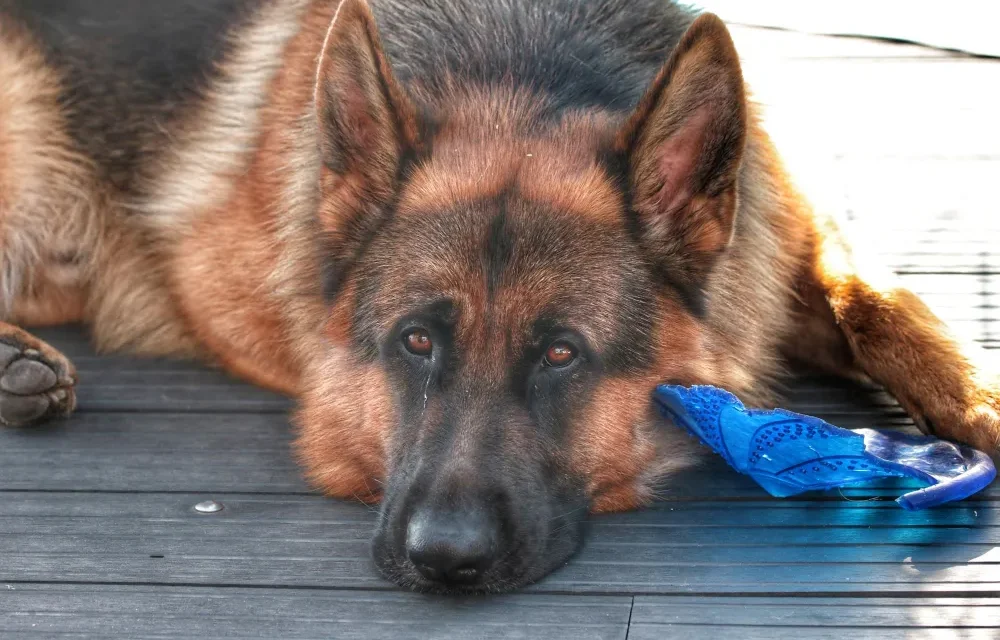
Have you noticed your German Shepherd struggling, pacing, or acting unusually anxious after a meal? These could be early warning signs of a stomach flip, a dangerous condition that progresses quickly.
It’s called a stomach flip or GDV (Gastric Dilatation-Volvulus), and it strikes suddenly, often catching loving owners completely off guard.
One moment your dog seems fine, eating, playing, or relaxing, and the next, they’re in serious distress. Without quick action, GDV can become life-threatening within hours.
Understanding what causes it, how to recognize the early symptoms, and what to do in those critical moments can make the difference between losing your beloved companion and saving their life
What is a German Shepherd Stomach Flip (GDV)?
The term “bloat” technically refers to a stomach that fills rapidly with gas (Gastric Dilatation). However, the truly life-threatening crisis occurs when this bloat progresses into a volvulus, meaning the stomach twists on its axis.
The stomach twisting seals off both the entry (esophagus) and exit (duodenum), trapping the gas, food, and fluid inside. The trapped contents continue to ferment and expand, causing massive pressure. This pressure cuts off blood flow to the stomach wall and major veins returning blood to the heart, sending the dog into severe shock very quickly. Without immediate emergency veterinary intervention, GDV is often fatal within hours.
What Causes a German Shepherd’s Stomach to Twist?
While this is a crucial question, most dog owners don’t realize that the exact cause of a stomach twist, or Gastric Dilatation-Volvulus (GDV), is still not completely understood.
What we do know is that several contributing factors can increase the risk, especially in German Shepherds due to their body structure and lifestyle habits. Interestingly, this condition is also more common in older dogs, as their stomach muscles and ligaments weaken with age.
What percentage of German Shepherds get bloat?
While the exact percentage varies, studies suggest that German Shepherds have a higher risk of bloat compared to many other breeds. One study identified a 21.9% genetic susceptibility for bloat in the German Shepherd breed based on the dogs included in the study.
Common Factors That Can Trigger a Stomach Twist
Deep-Chested Anatomy
German Shepherds have a naturally deep, narrow chest, which gives their stomach more space to swing within the abdominal cavity. This anatomy makes it easier for the stomach to rotate, especially when filled with food, gas, or water. When rotation occurs, it can trap air and block both the entry and exit of the stomach, rapidly increasing internal pressure. This structural predisposition is one of the main reasons why German Shepherds are among the top breeds prone to GDV.
Eating Too Quickly
Many German Shepherds tend to wolf down their meals with great enthusiasm, often swallowing food and air at the same time. The excessive air intake expands the stomach, creating the perfect conditions for bloating and twisting. Fast eaters are also less likely to chew their food properly, making digestion harder and increasing gas buildup. Using slow-feeder bowls or puzzle feeders can help pace their eating and significantly reduce the risk of this issue.
Large Meals Once a Day
Feeding your dog a single large meal per day overloads the stomach, stretching it beyond its natural capacity. A full stomach filled with food and air is heavier and more likely to rotate within the abdominal cavity. The risk becomes even higher if the dog drinks a lot of water right after eating or engages in sudden activity. Splitting meals into two or three smaller portions throughout the day helps reduce pressure and keeps digestion stable.
Exercise Before or After Meals
Allowing your German Shepherd to run, jump, or play vigorously before or after eating can easily upset the balance of the stomach. The motion causes food and gas to shift, and in some cases, the stomach can flip as it moves within the chest cavity. Physical activity should ideally be avoided for at least one hour before and after mealtime. Instead, give your dog time to rest and digest peacefully before resuming play or exercise.
Stress and Anxiety
German Shepherds are intelligent, sensitive, and highly emotional dogs. When stressed, whether from separation, loud noises, or sudden environmental changes, they may swallow more air or experience digestive upset. Stress can also alter their breathing and slow down gastric emptying, allowing gas to build up more easily. Keeping their environment calm, consistent, and predictable can go a long way in preventing stress-induced bloating.
Age and Genetics
As dogs age, the muscles and ligaments supporting their stomach naturally weaken, increasing the likelihood of twisting. Genetics also play a strong role, if your German Shepherd has a family history of GDV, they may be predisposed to developing it themselves. Older dogs are also more likely to have slower digestion, which can lead to gas retention and distention. Regular vet checkups can help monitor these risks, especially for senior or genetically susceptible dogs.
Raised Food Bowls
Contrary to older advice, feeding from elevated bowls can actually increase the risk of GDV in large breeds. When eating from a raised position, dogs may swallow more air, contributing to faster bloating. Some studies have linked raised feeders to a significant rise in GDV cases among large, deep-chested breeds. It’s best to feed your dog at ground level, encouraging a more natural eating posture.
Type of Diet
The type and consistency of food your dog eats can also influence bloat risk. Diets consisting solely of dry kibble high in fat or fermentable ingredients tend to produce more gas during digestion. If your dog eats quickly or gulps water immediately after eating, this gas buildup can worsen, leading to discomfort or torsion. Mixing kibble with water, wet food, or feeding a more balanced diet can help regulate digestion and minimize excess gas formation.
Also Read: Are German Shepherds Prone To Cancer?
How do I know if my German Shepherd is bloated? Symptoms
Bloat in German Shepherds can happen fast, sometimes in less than an hour, and it’s always an emergency. Knowing what signs to look for can help you act quickly and possibly save your dog’s life. Here are some clear signs to watch out for:
1. Swollen or Tight Belly
The most common sign of bloat is a sudden, swollen belly that feels hard or tight when you touch it. You might notice your dog’s tummy looking round or larger than usual. If you see this, go to the vet immediately, it’s not something that will go away on its own.
2. Trying to Vomit but Nothing Comes Out
Your dog may try to vomit or gag, but nothing (or only a bit of foam) comes out. This happens because the stomach has twisted and trapped everything inside. If your German Shepherd is retching with no result, it’s a serious red flag.
3. Restlessness and Pacing
Dogs with bloat often can’t get comfortable. You might see your dog pacing, standing up and lying down repeatedly, or whining. This restlessness is their way of showing discomfort and pain.
4. Fast Breathing or Panting
As the stomach expands, it can press on the lungs, making it hard for your dog to breathe. You may notice heavy panting or short, quick breaths, even if your dog hasn’t been active.
5. Pale Gums and Weakness
Check your dog’s gums, if they look pale, grey, or bluish instead of pink, your dog could be going into shock. Your dog may also look weak or wobbly on their feet. This means you need to get to the vet right away.
6. Drooling More Than Usual
If your German Shepherd suddenly starts drooling a lot or has foamy saliva, it could be a sign of bloat. This happens because they can’t swallow properly when the stomach is twisted.
7. Sudden Collapse
In severe cases, your dog may suddenly collapse or become unresponsive. This means the situation is critical and needs immediate emergency care.
Read more about: German Shepherd Hip Dysplasia: Signs, Symptoms, and Early Detection
How do I Stop my Dog’s Stomach From Flipping?
While there is no foolproof method for preventing a stomach flip (GDV), you can significantly lower the risk by adopting a few wise changes to your dog’s regular routine. Begin by giving your German Shepherd smaller meals several times each day rather than one huge meal; this prevents the stomach from overfilling.
Use a slow feeder dish to prevent your dog from eating too quickly, as gulping food and swallowing air are typical causes of bloat. Avoid allowing your dog to exercise immediately before or after eating; instead, allow at least an hour of recuperation before engaging in any vigorous play. It also helps to keep your dog’s stress levels down, as worry can impair digestion and cause extra gas buildup. Make sure your dog has access to fresh water, but don’t allow them to drink excessively after meals or exercise.
Finally, if your veterinarian recommends it, you can discuss gastropexy, a prophylactic operation that secures the stomach and prevents twisting. Taking these basic precautions can help keep your German Shepherd safe, healthy, and bloat-free.
How long can a dog live with a flipped or twisted stomach?
Sadly, dogs with a flipped or twisted stomach (GDV) do not have much time. When the stomach twists, it interrupts blood flow to key organs and traps gas inside, causing the dog to fall into shock quickly. Without emergency treatment, a dog may only live for a few hours, if not less than one.
This is why acting quickly is vitally necessary. The longer you delay, the greater the likelihood of organ failure and death. If you fear your German Shepherd has bloat, seek immediate medical attention from an emergency veterinarian. With prompt medical or surgical care, many dogs can recover and live long, healthy lives. Quick action can mean the difference between life and death.
German Shepherd stomach flip treatment
1. Recognizing the Emergency
GDV progresses very quickly, and early intervention is critical. Common signs include:
- A distended or hard abdomen that looks bloated.
- Unproductive vomiting or retching without bringing anything up.
- Restlessness, pacing, or signs of pain, often whining or stretching awkwardly.
- Rapid breathing, pale gums, or collapse in severe cases.
If your German Shepherd shows these symptoms, it’s crucial to rush to the vet immediately. Time is of the essence; the condition can become fatal within hours.
2. Immediate Veterinary Intervention
Once at the veterinary clinic, the treatment focuses on stabilizing the dog and correcting the twist:
- Stabilization with IV fluids: GDV can cause shock due to poor blood flow. Fluids help maintain circulation and blood pressure.
- Decompression of the stomach: A tube may be inserted through the mouth or a needle through the abdominal wall to release the trapped gas. This relieves pressure and reduces pain.
- Emergency surgery (gastropexy): In most cases, surgery is necessary to untwist the stomach. The vet will also check for tissue damage and may attach the stomach to the abdominal wall to prevent recurrence.
- Medications: Pain relief, antibiotics, and heart-supporting drugs may be administered to aid recovery.
3. Recovery and Post-Treatment Care
After successful surgery, your dog may need a hospital stay of 1–3 days. Recovery requires:
- Small, frequent meals rather than large portions to avoid stressing the stomach.
- Restricted physical activity immediately after meals to prevent another twist.
- Close monitoring at home for vomiting, bloating, lethargy, or unusual behavior. Any recurring symptoms should be reported to the vet immediately.
4. Preventing Future Stomach Flips
While GDV can sometimes occur without warning, preventive steps include:
- Feeding smaller, multiple meals instead of one large meal per day.
- Avoiding vigorous exercise before and after eating.
- Discussing preventive gastropexy with your vet, especially for high-risk German Shepherds.
Can dogs recover from twisted stomachs?
Yes, dogs can recover from a twisted stomach, but timing is everything. This condition, called GDV, is very serious, and the faster your dog gets veterinary care, the better the chances of survival. Treatment usually involves emergency surgery to untwist the stomach and sometimes secure it so it doesn’t happen again. After surgery, dogs often stay in the hospital for a few days and may need small, frequent meals and gentle activity while they heal. With quick action and proper care, many dogs go on to live healthy, normal lives after a stomach twist.
Does Geman Shepherd Puppies get GDV?
Yes, German Shepherd puppies can get GDV (bloat or twisted stomach), but it is extremely rare in very young dogs. GDV is mostly a concern in adult, deep-chested dogs, usually around 4–12 years old. Puppies have smaller, more flexible stomachs, so the risk is much lower.
However, certain factors could slightly increase the risk even in young dogs:
- Rapid eating or swallowing large amounts of food at once
- Drinking large amounts of water quickly
- Stress or sudden vigorous activity after eating
Key point: While it’s uncommon, it’s still wise to feed puppies smaller, frequent meals and avoid intense exercise immediately after feeding.
Is GDV more common in male or female German Shpeherd?
GDV can occur in both male and female German Shepherds, with no strong link to gender. The risk is mainly influenced by factors such as body structure, deep-chested anatomy, and eating habits, rather than whether the dog is male or female. German Shepherds with large, deep chests are naturally more prone to stomach twisting. Other contributing factors include eating too quickly, consuming large meals, or exercising vigorously after eating. Being aware of these risks and taking preventive steps can help keep your dog safe and healthy.