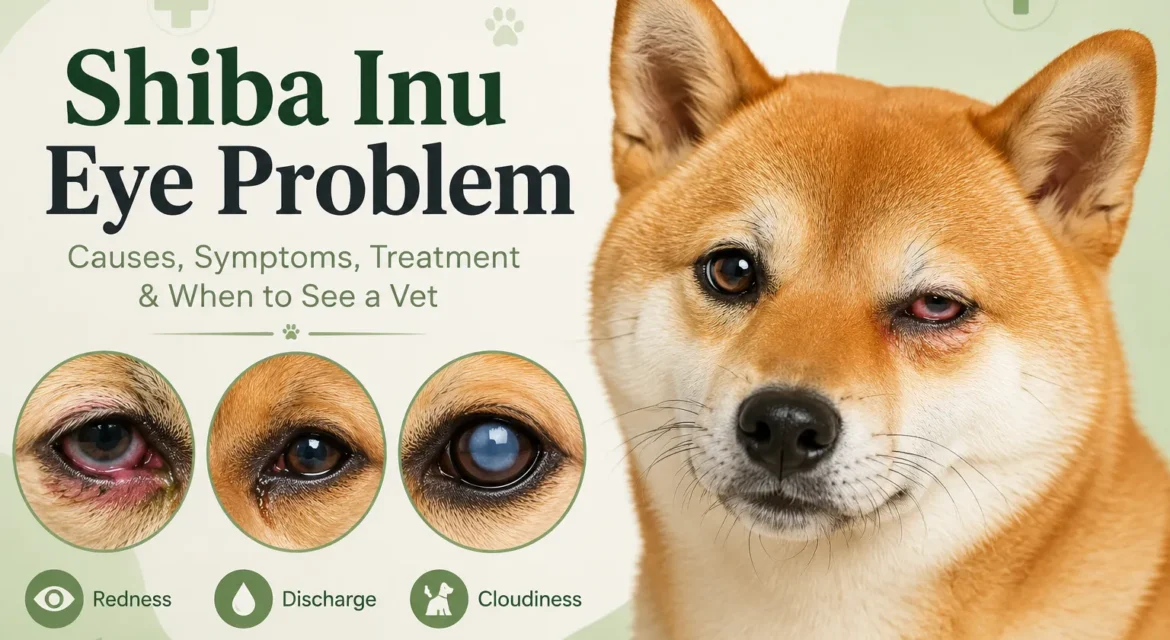
Your Shiba Inu may still be wagging its curled tail and playing around being happy, but its vision might be slowly fading away without you noticing. It may not come to your attention, but some of the most serious eye diseases in Shiba Inus can progress with little to no obvious symptoms. This intelligent breed is genetically predisposed to several eye conditions, including glaucoma, cataracts, progressive retinal atrophy (PRA), and entropion.
By the time your dog starts bumping into furniture or serious damage may have already occurred, knowing these issues, recognizing warning signs early, and seeking timely veterinary care can make all the difference. In this guide, let’s explore the most common eye problems affecting Shiba Inus, their symptoms, causes, treatment options, and practical tips to help keep their eyes healthy.
Shiba Inu and Eye Problems
Shiba Inus possess certain genetically based features that predispose them to some eye disorders, like any other pure breeds. However, not all Shiba Inus experience eye problems because they have been genetically predisposed to them. There are various other reasons for eye disorders in Shiba Inus apart from their genetic structure. These include:
- Age-related changes
- Eye injuries or trauma
- Chronic inflammation
- Diabetes
- High intraocular pressure
- Inherited retinal disorders
Common Eye Problems of Shiba Inus
Glaucoma
Shiba Inu dogs have highly vulnerable eyes. They are susceptible to a condition known as glaucoma, which is a painful eye disease where the optic nerve is destroyed gradually. It mostly results from the accumulation of fluids that make an obstacle on the front side of the eye, and this leads to putting pressure on the optic nerve.
The breed of Shiba Inu dogs is susceptible to a condition where there is a narrowed iridocorneal angle from birth. The eye condition results from aqueous humor, which is the fluid present in the front of the eye, not being able to drain out through an area known as the iridocorneal angle, which is made up of the iris and cornea.
Common Symptoms
Here are some common symptoms of Glaucoma:
- Red or bloodshot eyes
- Cloudiness
- Swollen eyeball
- Excessive tearing
- Blinking
- Eye pain
- Face rubbing
- Suddenly lost vision
Causes
Primary glaucoma is typically genetic, whereas secondary glaucoma arises as a result of inflammation, injury, tumors, or lens displacement.
Treatment
The treatment differs according to the degree of severity and may include:
- Eye drops to reduce intraocular pressure
- Oral medicines
- Laser procedures
- Surgical treatment
- Surgical removal of the painful eyeball
Cataracts
Cataracts generally develop in the later stages of life for Shiba Inus, and their level may vary. This condition is caused when the pupil becomes “cloudy” because of the opacity in the lens of the eye, which finally results in the rupture of the lens. The loss of vision due to cataracts in older Shibas is quite common.
However, dogs are able to adjust to losing their sight. Surgical removal of cataracts is yet another option to regain eyesight. Cataracts come in a variety of forms, and there are many treatments and surgeries available to address the problem.
Common Symptoms
Here are a few common symptoms of cataracts:
- Cloudy white or bluish lens
- Trouble in seeing in dim light
- Collisions with objects
- Uncertainty in walking stairs
- Lack of confidence in outdoor areas
Causes
Following are the reasons that cause cataracts in Shiba Inus:
- Hereditary
- Diabetes
- Eye injury
- Inflammation
- Old age
Treatment
Simply monitoring the problem can be sufficient for a mild case of cataracts. However, advanced cataracts usually need removal of the cloudy lens, followed by inserting an artificial lens. Cataract surgery is successful until there is no harm to the retina.
Taking care of your pet can be made easier if you are aware of the condition, its causes, symptoms, and treatment options. Contact us, read our articles, and discover the best practices for pet care.
Progressive Retinal Atrophy (PRA)
Progressive Retinal Atrophy (PRA) is one such disease that leads to degeneration of the eyes of Shiba Inu dogs and is often associated with the genes. This condition occurs due to deterioration of the photoreceptors inside the back of the eye, making it difficult to see in low light conditions. The dog will start suffering even during daylight hours as the damage done to the sight becomes extensive.
The fact is that PRA does not lead to any kind of pain, unlike glaucoma, but eventually makes the dog completely blind. PRA can be identified well before the dog has become blind, but there is currently no treatment for the illness. This gives the dog and its owner enough time to get ready for blindness.
Common Symptoms
Here are the symptoms of PRA:
- Blindness at night
- Traveling in the dark becomes challenging
- Dilated eyes
- Enhanced eye shine
- Progressive loss of vision during the day
Causes
PRA is a genetic disorder that impacts the retina caused by inherited genetic abnormalities. To lower the chance of transferring the illness to subsequent generations, responsible breeders frequently examine their breeding dogs. PRA cannot be prevented by food or lifestyle because it is inherited.
Treatment
As of now, retinal degeneration cannot be treated or reversed. But veterinarians may suggest:
- Regular eye examinations.
- Genetic testing for dog breeding.
- Supplementing with antioxidants to support general eye health.
- Maintaining consistent furniture and home arrangements.
- Using scent-based toys and audible cues to enable blind dogs to freely move around.
Distichiasis
The Shiba Inu dog is more prone to having a condition known as distichiasis, which is among the most inherited diseases in dogs. This disease is caused by extra hair growing on the eyelids and rubbing against the surface of the eye.
The misdirected eyelashes irritate the eye and cause corneal injury when they continually rub against the surface of the eye. These abnormal hairs might result in corneal ulcers and persistent eye discomfort if left untreated.
Common Symptoms
Some of the common symptoms are:
- Blinking too much
- Redness and watery eyes
- Eye discharge and corneal irritation
Causes
The improper growth of the oil glands along the eyelids is usually the cause of distichiasis. Some dogs grow several hard lashes that constantly scratch the cornea, while others just have a few soft hairs that are uncomfortable.
Treatment
The treatment will depend upon the intensity of the symptoms and can include:
- Eye drop application for soothing the eyes.
- Removal of the disturbing lashes.
- Cryotherapy (freezing of the abnormal hair follicles)
- The abnormal follicles can be eliminated through electrolysis or laser therapy.
- Surgical correction in the extreme cases.
Entropion
If either or both of the eyelids turn inwards, the lashes and the hair around them rub against the surface of the eyeball. This disorder is called entropion, which is seen among Shiba Inu. If left untreated, this constant rubbing may lead to inflammation, corneal ulcers, infection, and pain.
Common Symptoms
Here are some common symptoms:
- Squinting
- Increased blinking
- Watery eyes
- Eye discharge
- Face rubbing corneal ulcers
Causes
Entropion is common in certain breeds of dogs, like Shiba Inus, because this condition is inherited and can also be present at birth. Also, it can develop later in life caused by:
- Eye injury
- Inflammation
- Scarring of the eyelid
- Weak muscles that occur as a result of aging
Treatment
Here are some treatment options:
- Eye lubricants for short-term protection of the cornea
- Antibiotics in case of any other infections
- The ideal long-term method would be through surgery to correct the misalignment of the eyelid.
- Tests should be carried out after surgery to ensure complete recovery without any risk of reoccurrence.
After surgery, most dogs recover completely and experience less irritation.
How are Shiba Inus currently tested for glaucoma risk?
Gonioscopy can be used by veterinary ophthalmologists to examine the iridocorneal angle. This is the only way to assess whether a dog was born predisposed to developing the type of glaucoma that is common in Shiba Inus. However, gonioscopy is not the most straightforward procedure to carry out in Shiba Inus.
What Are the Signs Your Shiba Inu Needs Immediate Veterinary Care?
If your dog experiences the following signs, you must immediately the veterinary help:
- Sudden blindness
- Swollen eye
- Sudden appearance of a cloudy eye
- Extreme redness
- Continuous squinting
- Eye injury
- Bleeding
- Yellow or green discharge
- Continuous rubbing of face
- Enlargement of eyeball
Things to Consider While Living with a Blind Shiba Inu
Dogs tend to adapt rather well to blindness, although it may prove to be a difficult period for the pet owner emotionally. Some of the tips that will come in handy while dealing with blind Shiba Inus include:
- Furniture should be placed consistently.
- Avoid making any sudden changes within the home.
- Use voice commands regularly
- Ensure safety from any stairs by blocking them
- Put food and water bowls in the same places
- Give the dog toys with smell
- Stick to the routine.
Conclusion
Eye exams are an important step in diagnosing problems before they escalate, no matter how old your Shiba Inu is. In order to ensure that your Shiba Inu remains comfortable and that their vision remains clear, routine monitoring is needed since eye problems develop gradually. Being aware of various eye problems such as glaucoma and cataracts helps you react quickly and provide the best care to your pet.
Your Shiba Inu can continue to explore the surroundings with comfort, confidence, and uncluttered vision with careful attention and early intervention. One of the best things that you can do for the future wellness of your pet is to work with your vet and prioritize eye care. To learn more about how to properly care for your pets and safeguard their long-term wellness, get in touch with us or visit our website.