If you’ve ever seen your dog hesitate before eating, paw at their mouth, or suddenly lose interest in their favorite treats, you know how heartbreaking it feels, not knowing what’s wrong or how to help.
The truth is, many dental problems in dogs start silently, long before any visible signs appear. It’s even sad that staggering 80% of dogs show signs of dental disease by age three.
And as a pet parent, that uncertainty can be scary. You don’t need to be a veterinarian, but you do need to understand the basic blueprint of your dog’s mouth.
That’s why understanding your dog’s dental anatomy isn’t just “nice to know”, it’s the key to protecting them from pain, discomfort, and preventable health issues. In this guide, we’ll walk you through how your dog’s teeth are built, what each part does, and how recognising the early warning signs can make all the difference in keeping your best friend healthy and happy.
The Basics of Dog Dental Anatomy
Types of Teeth
Dogs typically have 42 teeth, which are categorized into different types, each serving a specific function:
- Incisors (12 total)
The small, sharp teeth located at the front of the mouth. They are primarily used for biting and grooming. - Canines (4 total)
These are the long, pointed teeth next to the incisors. Canines, often referred to as “fangs,” play a significant role in holding and tearing food. - Premolars (16 total)
Located behind the canines, premolars are used for grinding and chewing food. They have a flatter surface, which aids in the breakdown of various food types. - Molars (10 total)
These larger teeth at the back of the mouth are designed for crushing and grinding. They complete the process of breaking down food for digestion.
How many teeth does an adult dog have?
Adult dogs have 42 permanent teeth, including 12 incisors at the front for grooming and nibbling, 4 long canines for holding and tearing, 16 premolars along the sides for cutting, and 10 molars at the back for grinding. Compared to humans, who have 32 adult teeth, dogs have 10 more teeth, mainly additional premolars and molars adapted to their natural diet.
how many teeth does a puppy have?
Puppies, on the other hand, are born toothless but develop 28 deciduous (baby) teeth by 3–6 weeks of age. These include 12 incisors, 4 canines, and 12 premolars, but no molars. In comparison, human children have 20 baby teeth, so puppies actually have 8 more teeth at this stage, allowing them to chew, explore, and learn bite control before their permanent adult teeth grow in.
Understanding Deciduous vs Permanent Teeth
Dogs, like humans, go through two sets of teeth during their lifetime: deciduous (baby) teeth and permanent (adult) teeth. Puppies are born toothless, but by around 3 to 6 weeks, their deciduous teeth emerge. These 28 baby teeth, comprising incisors, canines, and premolars, are sharp, small, and perfectly designed for chewing soft food, exploring their environment, and learning bite control during play with littermates. Although temporary, they play a critical role in shaping the mouth for adult teeth.
By approximately 4 to 6 months of age, puppies begin to lose their deciduous teeth, which fall out as permanent teeth grow in. Adult dogs develop 42 teeth, including the full set of incisors, canines, premolars, and molars. Permanent teeth are larger, stronger, and more durable, allowing dogs to handle tougher food and engage in natural chewing behaviors. Understanding this transition is crucial for pet owners, as retained baby teeth, delayed eruption, or abnormal tooth alignment can lead to dental problems that require veterinary care.
Recognizing the difference between deciduous and permanent teeth helps you monitor your puppy’s growth, spot early issues, and ensure a healthy, pain-free smile as they mature.
The Structure of a Dog’s Tooth
A dog’s tooth is more complex than it appears. Each tooth has several components:
- Crown: The visible part above the gum line.
- Root: Anchors the tooth into the jawbone.
- Enamel: The hard, protective outer layer that prevents decay.
- Dentin: The inner layer beneath enamel, sensitive and vital for tooth strength.
- Pulp: The soft core containing nerves and blood vessels.
- Cementum: A layer covering the root, helping attach the tooth to the jaw via periodontal ligaments
Why Dog Dental Anatomy Matters More Than You Think
Dog dental health isn’t just about white teeth or fresh breath. Their teeth are essential tools for:
- Eating and proper nutrition
- Grooming and self-cleaning
- Playing safely
- Defending themselves
- Expressing natural instincts
When something goes wrong, it affects much more than their mouth, dental diseases can lead to infections, weight loss, organ damage, and chronic pain. Understanding the basics of their dental anatomy helps you spot early signs and prevent irreversible damage.
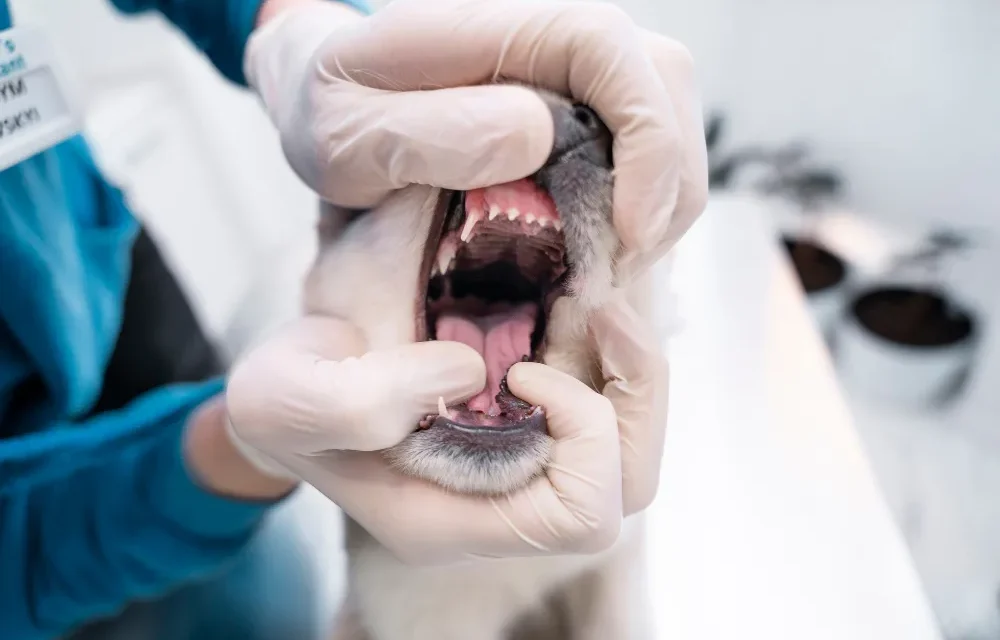
What a Healthy Dog Mouth Should Look Like
A healthy dog mouth is a vibrant indicator of overall well-being. When you check your dog’s oral cavity, everything should present as clean, firm, and robust.
Teeth: The Pearly Whites
The 42 permanent teeth should be clean, white, or off-white, with a smooth, glossy surface. There should be no visible buildup of yellow or brown tartar, especially along the gumline.
- Alignment: All teeth should be properly aligned in a scissor bite, where the upper incisors slightly overlap the lower incisors. The canine teeth should interlock neatly without digging into the gums or palette.
- Integrity: The teeth should be structurally sound, with no visible cracks, chips, or fractures. The tips of the canine and carnassial teeth should be sharp and defined, reflecting their function.
- Firmness: Each tooth must be firmly rooted in its socket. There should be zero visible movement or wiggling.
Gums (Gingiva): Pink and Pliable
The gums are the most immediate tell-tale sign of health or disease.
- Color: Healthy gums are typically a uniform, vibrant, bubble-gum pink. However, some breeds naturally have dark pigmentation (black or brown spots) on their gums, which is normal.
- Texture and Fit: The gums should be firm, moist, and tightly hug the base of each tooth (like a turtleneck collar). They should not appear puffy, swollen, or receding.
- Capillary Refill Time (CRT): If you gently press your finger against a pink section of the gum and release, the white spot created should return to a pink color in less than two seconds (often called “blanching”). This indicates healthy blood circulation.
Tongue, Roof of the Mouth, and Inner Cheeks
- Tongue: The tongue should be uniformly pink (or mottled with black/blue spots, depending on the breed), moist, and free from deep cracks, lesions, or unusual lumps.
- Soft Tissues: The inside of the cheeks and the roof of the mouth should be smooth, moist, and without any redness, inflammation, or sores.
The Scent
Crucially, a healthy dog mouth should have a neutral or mild, non-offensive odor. While not exactly minty fresh, true “dog breath” (a foul, decaying, or sewage-like smell) is almost always a sign of heavy bacterial buildup, infection, or underlying disease.
Warning Signs of Dental Issues Every Dog Owner Should Watch For
Dental problems in dogs rarely start with dramatic symptoms, they creep in quietly, showing subtle changes that are easy to miss unless you know what to look for. Paying attention to these early warning signs can spare your dog from unnecessary pain and prevent bigger health issues down the road.
✔ Persistent Bad Breath
A slight doggy smell is normal, but a strong, sour, or rotten odor often means bacteria is building up below the gums.
✔ Difficulty Chewing or Dropping Food
If your dog chews on one side, pauses mid-meal, or suddenly avoids crunchy treats, it may signal pain or tooth sensitivity.
✔ Pawing at the Mouth or Face
Dogs often try to soothe oral discomfort by rubbing their mouth or scratching around the muzzle.
✔ Red, Swollen, or Bleeding Gums
These are early signs of gingivitis or infection—and they should never be ignored.
✔ Excessive Drooling
A sudden increase in drooling, especially if your dog normally drools very little, can indicate oral pain or irritation.
✔ Visible Tartar or Discolored Teeth
Thick yellow or brown buildup along the gumline is a sign of progressing dental disease.
✔ Loose or Missing Teeth
Adult dogs should not lose teeth; if they do, it’s usually due to severe infection or advanced periodontal disease.
✔ Facial Swelling or Sensitivity
Swelling near the eyes, nose, or jaw area can indicate a tooth-root abscess, which is extremely painful.
✔ Behavioral Changes
A normally playful dog becoming withdrawn, cranky, or reluctant to play tug-of-war may be silently dealing with dental pain.
Read More: How to Clean Your Dog Teeth At Home? Tips & Tricks
Can a dog survive with no teeth?
Yes, a dog can survive without teeth, but life without them comes with some adjustments. Teeth are essential for chewing, tearing, and grinding food, so dogs without teeth may struggle to eat harder kibble or chew toys. In these cases, pet owners often switch to soft or wet food, moistened kibble, or specially formulated diets to ensure proper nutrition.
While teeth are important for oral health and natural behaviors like chewing and playing, losing them, whether due to age, disease, or injury, doesn’t automatically shorten a dog’s life. However, missing teeth can sometimes lead to gum irritation, jawbone loss, or difficulty eating, so regular veterinary check-ups and appropriate diet adjustments are crucial.
With proper care, dogs can remain happy, healthy, and active even without a full set of teeth, proving that a toothless smile can still be a joyful one.
How often should dogs get dental checkups?
Regular dental checkups are essential for keeping your dog’s mouth healthy and preventing painful problems before they escalate. Most veterinarians recommend a professional dental exam at least once a year, but the frequency can vary depending on your dog’s age, breed, diet, and oral health history.
Click to read What is the average cost of dental cleaning for dogs?
Puppies and young dogs may require more frequent visits to monitor the transition from deciduous (baby) teeth to permanent teeth and to catch any issues like retained baby teeth or misalignment early. Adult dogs, especially small breeds prone to tartar buildup or periodontal disease, may benefit from checkups every 6–12 months.
During these exams, the vet can:
- Assess gum health and look for early signs of gingivitis or infection
- Check for fractured or worn teeth
- Remove tartar and plaque build-up
- Provide guidance on at-home dental care
Regular checkups, combined with consistent home care like brushing and dental chews, help ensure your dog’s teeth and gums stay strong, pain-free, and fully functional throughout their life.
Conclusion
Your dog’s smile is more than just a cute feature, it’s a window into their overall health and wellbeing. Understanding their dental anatomy, from baby teeth to adult teeth, and recognizing the early warning signs of dental problems can make a world of difference in preventing pain, discomfort, and serious health issues.
Regular checkups, proper at-home care, and a watchful eye for changes in eating habits, behavior, or gum health are all key to keeping your dog happy, healthy, and thriving. By learning the basics of dog dental health and staying proactive, you’re not just caring for their teeth, you’re safeguarding their comfort, confidence, and quality of life for years to come.