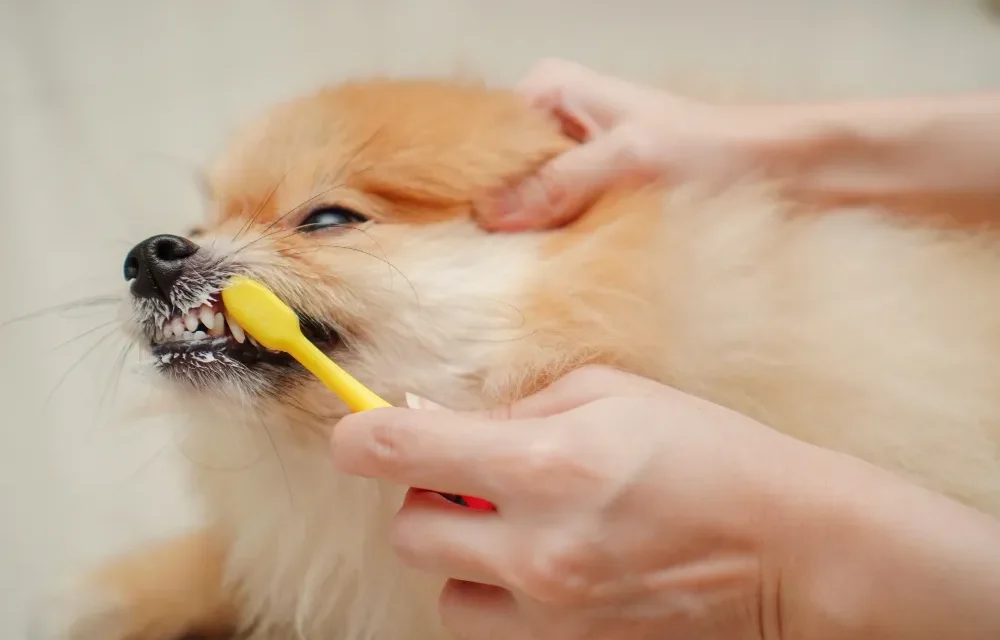
Our dogs have a way of living life on their own terms. They sniff every corners, chew on whatever they find, and enthusistically share slobbery kisses to everyone without a seconf thought. Unlike us, they don’t worry about plaque, tartar, or gum disease. As a dog owner, this carefree approach often means that those adorable kisses come with a less-than-pleasant whiff of bad breath.
Unfortunately, poor hygiene isn’t just about stinky kisses. In fact, Periodontal disease affects nearly 80-90% of dogs over age 3, making dental care one of the most critical parts of preventative health.
The good news? Cleaning your dog’s teeth at home is one of the most loving and effective things you can do to keep your pup out of that 80% statistic.
It might seem daunting at first, introducing a toothbrush to a creature that only understands ‘play’ and ‘treats’ can feel like chaos, but with the right approach and plenty of tasty rewards, you’ll be a pro in no time.
How to Clean Your Dog Teeth at Home? Steps
Step 1: Gather Your Supplies (The Essentials)
Before you start, make sure you have the right gear. Safety first! Do NOT use human toothpaste; it often contains Xylitol (which is toxic to dogs) or high levels of fluoride, which can upset their stomachs.
Enzymatic Dog Toothpaste:
This is the key! Enzymatic pastes are formulated with enzymes that break down plaque even with minimal scrubbing. They come in irresistible, dog-friendly flavors like poultry, beef, or peanut butter. This makes the whole experience a treat, not a chore.
A Dog Toothbrush:
You have a few options, depending on your dog’s size and temperament:
- Finger Toothbrush: Great for beginners, small breeds, and getting your dog used to the process. It slips over your index finger.
- Long-Handled Dog Toothbrush: Similar to a human brush, often with angled or dual heads for easier reach.
- Gauze Pad: If your dog absolutely refuses a brush, wrapping a piece of sterile gauze around your finger can be a gentler, texturized introduction.
Supplemental Dog Dental Products (Optional but Highly Recommended):
While brushing is the gold standard, these can help keep plaque at bay between sessions:
- VOHC-Approved Dental Chews: These chews have been scientifically tested to prove they reduce plaque and tartar buildup by mechanically scraping the teeth. They are a fantastic daily supplement.
- Dental Water Additives: Simply poured into your dog’s drinking bowl, these solutions contain ingredients that help control bacteria in the mouth.
- Oral Gels/Wipes: These can be applied directly to the gums and teeth on days when a full brushing session isn’t possible.
Step 2: The Easing-In Process (The Gentle Start)
Patience is your best friend here. If your dog isn’t used to you fiddling with their mouth, take this process slowly over several days or weeks.
- Introduce Touch: Start by gently massaging the outside of your dog’s lips and cheeks for just a few seconds. Do this when they are relaxed (like during cuddle time or watching TV). Reward them immediately.
- Lift the Lip: Once they’re comfortable with that, briefly lift their lip on one side to expose the teeth. Praise and reward.
- Introduce the Taste: Put a small dollop of the dog toothpaste on your finger. Let them lick it off. Now, they associate the toothpaste flavor with a delicious treat!
- Introduce the Tool: Put a tiny amount of paste on the toothbrush or finger brush. Let them chew or lick the brush briefly before you even attempt to brush.
Step 3: The Brushing Technique (Focus on the Outside)
Ready for the real deal? Remember, consistency beats intensity! Your goal is to brush every day, even if it’s only for a short time.
- Find a Good Position: Sit on the floor with your dog between your legs or have them sit calmly next to you.
- Lift the Lip: Gently lift your dog’s upper lip with one hand.
- Start with the Canines and Back Teeth: These are the teeth that tend to accumulate the most plaque and tartar. Start brushing the outer surface of these teeth first. You do NOT need to scrub the inner (tongue-facing) surface (the dog’s tongue usually handles most of the cleaning there).
- Angle and Motion: Hold the brush at a 45-degree angle to the tooth and gum line. Use small, gentle, circular, or back-and-forth strokes. Crucially, focus on where the tooth meets the gum, as that’s where plaque forms first and causes the most damage.
- Go Quick: Aim for about 30–60 seconds of brushing total, covering all the visible teeth. It’s much better to brush quickly every day than to have a 5-minute struggle once a week.
- Praise and Reward: The moment you are done, shower them with praise, a cuddle, or their favorite toy or treat. End the session on a high note every time!
Pro Tip: If you can only manage the large upper canine and rear molars on the first few tries, that’s a huge victory! Focus on these teeth as they are the most critical for reducing the risk of periodontal disease.
Step 4: Maintaining the Routine & Spotting Problems
Brushing is the foundation, but maintaining the routine and recognizing early signs of trouble are just as vital to your dog’s long-term oral health.
- Consistency is King: The ideal is to brush your dog’s teeth daily. Plaque takes only 24–48 hours to start hardening into tartar, which is cemented to the tooth and can only be removed by a professional veterinary cleaning under anesthesia.
- Establish a Routine: Try to brush at the same time every day, like right before a walk or immediately after dinner. Dogs thrive on predictable routines.
- Utilize Supplements Wisely: Use your VOHC-approved chews and water additives as instructed. They are great support tools, but remember they are never a substitute for the mechanical action of brushing.
How long do i need to brush my dog’s teeth?
You should aim for about 30 seconds to 1 minute total for brushing your dog’s teeth. Initially, keep sessions very short, focusing on a few teeth at a time, and gradually increase the duration as your dog gets more comfortable. Brushing at least every other day is recommended to prevent plaque from hardening into tartar.
When to Call a Veterinarian for Dog Dental Cleaning? (Warning Signs)
Brushing is the best form of daily prevention, but it cannot fix existing, painful, or advanced dental issues. If you notice any of the following symptoms, stop trying to forcibly brush the area (which may cause pain) and book a full veterinary dental check-up immediately:
- Significant Tartar Build-up: You see extensive brown or yellow calcified material on the tooth surface. This is hard tartar that can only be safely removed with professional scaling under anesthesia.
- Inflamed or Bleeding Gums (Gingivitis): Gums that are bright red, puffy, or bleed easily when touched are signs of inflammation and infection.
- Changes in Eating Habits: Your dog suddenly drops food, chews only on one side of their mouth, seems reluctant to eat hard kibble, or shows excessive drooling. These are strong indicators of oral pain.
- Severe Halitosis: If the bad breath is persistent and profoundly foul (not just standard “dog breath”), it often signals a deep infection or abscess below the gumline.
- Missing or Loose Teeth: Any teeth that are obviously loose, crooked, or missing entirely require immediate veterinary evaluation, as they are often associated with painful root exposure or fracture.
Why Clean Your Dog’s Teeth?
It’s easy to dismiss persistent “dog breath” as just part of the package when you own a pup. However, skipping dental care doesn’t just result in smelly kisses, it’s a direct threat to your dog’s overall health and well-being.
Here is why prioritizing your dog’s oral hygiene is critical:
1. Avoiding the Pain of Periodontal Disease
This is the number one reason. Periodontal disease (gum disease) is an infection caused by plaque and tartar buildup.
- Plaque Hardens: Plaque is a sticky film of bacteria. If not removed daily, it hardens into rock-solid tartar within 24–48 hours.
- Gum Recession: Tartar pushes against the gums, causing them to pull away from the tooth. This creates pockets where bacteria thrive.
- Pain and Tooth Loss: The infection erodes the bone and ligaments supporting the tooth, leading to severe pain, loose teeth, abscesses, and ultimately, tooth loss. By the time you notice these signs, your dog is likely in serious discomfort.
2. Protecting Vital Organs (Systemic Health)
The bacteria living in your dog’s infected mouth don’t stay put. They are absorbed into the bloodstream through the inflamed gums and travel throughout the body.
- Heart Valve Damage: This bacteria can stick to the heart valves, leading to a condition called endocarditis (a serious heart infection).
- Liver and Kidney Strain: The constant flow of bacteria and toxins puts immense strain on the liver and kidneys as they try to filter the blood, potentially compromising their function over time.
3. Preventing Expensive Vet Bills
Routine, at-home brushing is essentially free, and professional dental cleaning costs typically range between $\$350$ and $\$1,000$.
Compare that to the cost of treating advanced disease: a dog requiring multiple tooth extractions, bone grafts, or specialized care for a jaw fracture due to decay can easily rack up bills ranging from $\$1,500$ to over $\$3,000$. Prevention is always cheaper, safer, and less stressful than cure.
4. Improving Quality of Life
A dog with severe dental pain won’t always cry or complain. They might just show subtle changes, like:
- Eating less (or slower).
- Dropping toys.
- Being less playful.Snapping when touched near the face.
Feeding Dental-Friendly Foods for Dog
What your dog eats can have a big impact on their dental health. Feeding dental-friendly foods helps reduce plaque and tartar buildup while supporting strong teeth and healthy gums.
Dry kibble, for example, tends to be better at scraping plaque from teeth compared to soft, wet food. Some specially formulated dental diets are designed to promote chewing and mechanically clean teeth as your dog eats.
You can also incorporate vet-approved dental treats and chews. These products not only satisfy your dog’s chewing instincts but also help reduce bacteria and freshen breath. Avoid sugary or sticky treats, which can stick to teeth and contribute to tartar formation.
Feeding dental-friendly foods and treats, in combination with regular brushing and professional cleanings, creates a complete approach to maintaining a healthy mouth and preventing diseased teeth in your dog.
Also Read: Types of Dog Food: Dry vs. Wet Which is Better?
Frequently Asked Questions
Are dental treats as good as brushing?
No, dental treats are not as good as brushing for your dog’s oral hygiene, but they serve as an excellent supplement. Brushing is the gold standard because the mechanical friction of the bristles, combined with enzymatic dog toothpaste, actively scrapes plaque and bacteria off the tooth surface and critically along the gumline, where periodontal disease begins.
Dental treats, even those approved by the VOHC (Veterinary Oral Health Council), work primarily by creating an abrasive action on the surface of the tooth as the dog chews, which helps reduce surface tartar.
Can coconut oil clean dog teeth?
Yes, you can use coconut oil to brush your dog’s teeth since it has antimicrobial qualities that help prevent plaque and tartar accumulation. Use a small amount on a gauze pad or a toothbrush designed specifically for dogs, then gently brush your dog’s teeth. Additionally, coconut oil can be used in conjunction with routine dental treatment to promote healthier gums and cleaner breath. However, it is not an effective replacement for brushing with a quality enzymatic dog toothpaste.
My small dog’s breath is worse than my large dog’s. Is this normal?
Yes, unfortunately, small breed dogs are genetically predisposed to more severe dental disease than large breeds. They often have more teeth crowded into a smaller jaw, leading to misalignment and increased surface area for plaque accumulation. This makes daily, diligent brushing absolutely critical for small breeds like Yorkshire Terriers, Chihuahuas, and Maltese.
My dog hates brushing. What can I do?
Start slow! Use finger brushes, gauze pads, or let your dog lick toothpaste from your finger first. Reward calm behavior with treats or praise. Gradually introduce the toothbrush, focusing on short, positive sessions.
Can puppies have their teeth brushed?
Yes! Brushing should start as early as possible to build good habits. Use a soft finger brush or gauze and pet-safe enzymatic toothpaste to get them comfortable with the routine.
Can water additives replace brushing?
No. Water additives can help reduce bacteria and support oral hygiene, but they cannot remove plaque or tartar. They work best as a supplement to brushing and dental chews.